Reader wants 'a good scare' for a specific night
The first thing to settle is not which movie is "best" but which kind of fear is wanted tonight — a jolt or a slow accumulation of dread. Those are different experiences, and different subgenres deliver them differently, so treating "scary" as one undivided category produces bad recommendations no matter how carefully a countdown is numbered.
If the goal is jolts, the slasher and the monster movie are built for that rhythm: a threat that appears, retreats, and reappears on a timer. Netflix frames its own horror roundup around exactly this need, describing it as viewing "when you want a good scare" rather than when you want a prestige critical pick — see 24 Horror Movies to Watch When You Want a Good Scare. If the goal is dread that sits with you rather than startles you, possession films and slow-burn folk horror do that instead, working through mounting unease rather than discrete shocks.
Once the mode is chosen, narrow to a subgenre and then to a single title that is actually available on a named service tonight, rather than working from an undated all-time list. A single watchable pick beats a sprawling ranking when the real question is "what do I watch in the next twenty minutes" — which is what "top 10 horror movies right now" is actually asking, even though most rankings answer it with decades-old canon rather than a dated availability check. A list that never states when it was last updated, or whether its entries are still streaming anywhere at all, is answering a different question than the one being asked.
Reader asks 'what is the No. 1 best horror movie?'
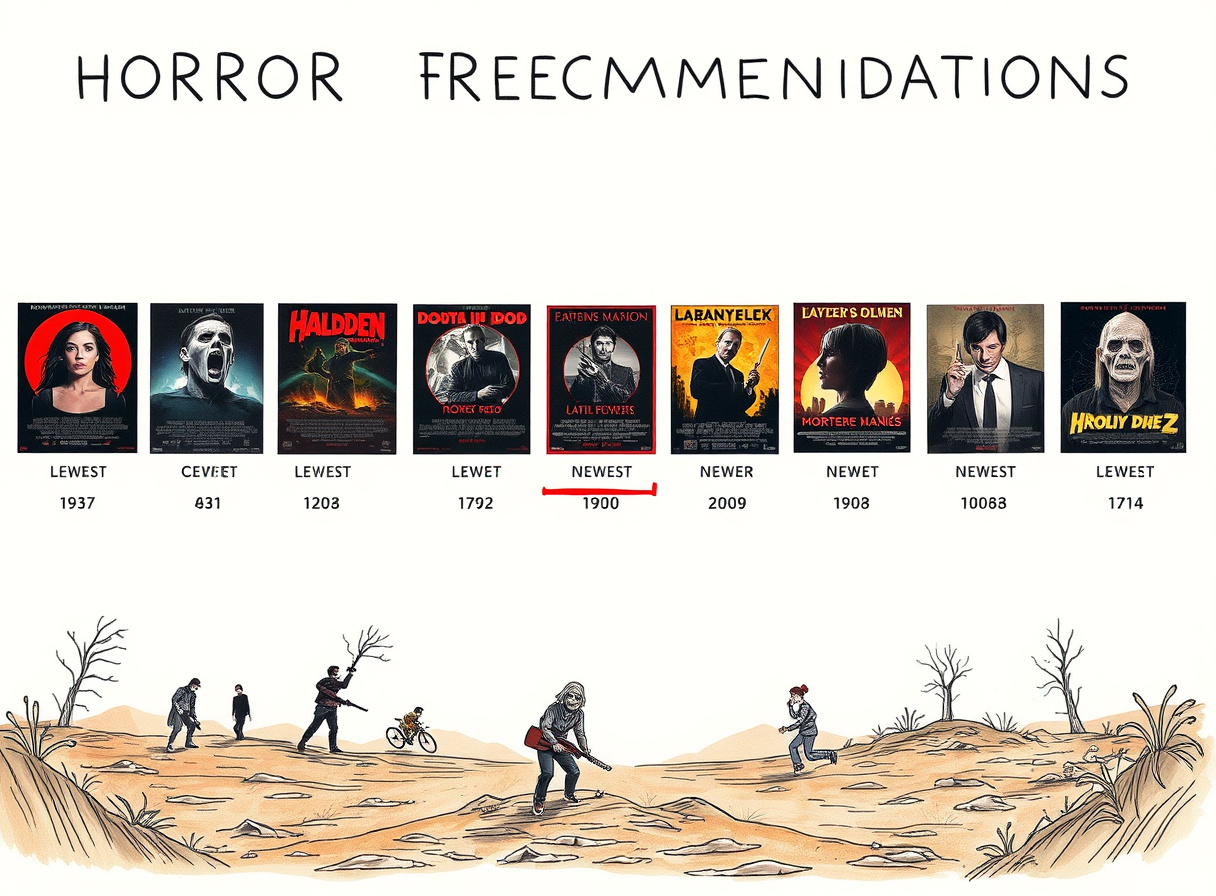
There is no single No. 1 — there are several No. 1s, one per ranking method, and they don't agree. The three methods in circulation are aggregate critic score, a single outlet's editorial pick, and one person's ranked taste, and each produces a different answer because each is measuring something different.
- Aggregate critic score: Rotten Tomatoes' own editorial guide compiles hundreds of reviews per title into a percentage, which is why its top pick reflects broad critical consensus rather than any one writer's preference — see 200 Best Horror Movies of All Time.
- Single-outlet critics' pick: Variety's list and Empire's list are each built by that publication's own writers and editors voting or ranking internally, so the results carry the taste of one newsroom rather than a crowd — see Variety's 100 Best Horror Movies of All Time and Empire's 50 Best Horror Movies Ever Made.
- One person's ranked taste: the Letterboxd list published under the account name filmexpress reflects a single viewer's ordering of favorites, which is closer to a recommendation from a well-watched friend than a critical consensus — see Best Horror Films of ALL TIME.
The practical move is to pick the method that matches what you actually want from a recommendation. Someone who wants "what will most people agree is well made" should use an aggregate. Someone who wants "what does a horror-literate individual actually watch again" is better served by a personal list. Treating any single one of these as the answer is where the "No. 1" question breaks down — the different totals aren't a mistake, they're answers to different questions, and knowing which question you're asking is most of the work.
Reader is choosing for a group with mixed tolerance
Group horror-watching fails in one specific, predictable way: one person taps out midway through and the evening stops working for everyone. That happens because a title was chosen on "quality" grounds without anyone checking intensity first.
Screen for three things before quality enters into it:
- Gore level — sustained graphic violence versus implied or off-screen violence.
- Animal or child harm — a smaller but real subset of viewers will disengage completely at this, regardless of how well the scene is shot.
- Sustained dread versus discrete jump scares — some viewers find unrelenting atmosphere harder to sit through than a series of shocks they can brace for.
Most numbered horror countdowns place a title at a position with no indication of what it will actually put on screen, so this screening step has to happen separately, before opening whatever list gave you the name. In the absence of a stated content rating, the safer default for mixed-tolerance groups is a monster or vampire film, which typically carries a clear external threat and comparatively less graphic realism than an extreme slasher entry, followed by confirming the pick is actually on a service everyone in the room can access — a rental one person owns and the rest don't is not a group pick, it's a solo one with an audience.
It's worth naming the ordering explicitly, since it's easy to reverse by accident: intensity gets checked first, and the ranked list only gets consulted after the group has agreed on what it can tolerate. Doing it the other way — picking the highest-ranked title and hoping tolerance works out — is the exact pattern that produces the walkout.
Reader wants to enter a franchise
Franchise entries usually get listed as separate line items with no indication of where a newcomer should actually begin. That's a real gap, because the original entry and the best-reviewed entry in a franchise are frequently not the same film.
The decision has two parts:
- Determine whether sequels need the original for plot, or only for tone. Some franchises are serialized and lose coherence if entered mid-stream; others are anthological, where each film restates its premise and the original matters mainly for establishing atmosphere rather than events a newcomer must know.
- Choose an entry point on that basis, not on ranking position. If the original is mainly a mood-setter, a newcomer can start with whichever entry is best regarded and treat the original as optional background viewing. If plot carries forward, start at the beginning regardless of where critics rank each installment.
The Hollywood Reporter's ranking of 21st-century horror mixes original entries and later sequels within the same countdown without distinguishing which requires the other — see 25 Best Horror Movies of the 21st Century, Ranked — which is useful for identifying strong individual films but not for sequencing a franchise. Decide the goal first — full continuity, or just the strongest single experience — then let that decide the order, rather than working through a countdown in the order it happens to be numbered.
Horror film as the object being recommended
"Horror film" is the umbrella term under which all of this sits, but the umbrella is wide enough that it hides more than it reveals. The genre spans well over a century of production and dozens of national traditions, which is why a bare "horror" label tells a reader almost nothing about tone, pacing, or intensity on its own.
What actually predicts whether a given viewer will enjoy a given title is the subgenre underneath that umbrella — slasher, possession, folk horror, monster movie, zombie film, vampire film — because each of those carries its own default pacing and its own default relationship to gore and jump scares. Sorting only by "horror film, ranked" combines the widest possible category with the narrowest possible axis (perceived quality), which is close to backwards from how a reader actually decides what to watch on a given night. Choosing a subgenre first, and a quality ranking second, gets to a workable answer faster than opening a two-hundred-title countdown and scrolling until something looks familiar.
Monster movie and zombie film as fear types
Monster movies and zombie films sit near each other on shelves but deliver fear differently, and knowing which one you're picking matters more than the shared "creature" label suggests.
The monster movie is built around jolts rather than dread, because its structure depends on periodically revealing and concealing a physical creature. That reveal-conceal rhythm is what produces the jump experience, as distinct from the accumulating unease of a possession or slow-burn film. It's also, in practice, one of the gentler entry points for a mixed-tolerance group, since the threat is usually externalized and visible rather than psychological or graphically realistic — a single creature functions as a clear antagonist a group can react to together, rather than a sustained atmosphere that some viewers tolerate less well than others.
The zombie film delivers something closer to sustained dread with a body-count structure layered on top: the threat is numerous rather than singular, and much of the tension comes from resource scarcity, group breakdown, and the possibility that someone the audience has grown attached to will be bitten. That makes it a poor choice for a viewer sensitive to sustained tension or to watching characters turn on each other, even when its gore level is comparable to or lower than a slasher's. A reader choosing between the two should ask whether they want one clear monster to root against, or a slower unraveling of a group under siege — that's the actual difference, not just the shared word "creature."
The distinction holds up across broad genre catalogs, which typically separate monster and zombie entries into their own subgenre headings rather than folding them into one undifferentiated "horror" bucket — a reasonable signal that each behaves differently enough from the rest of the genre to be worth choosing deliberately rather than incidentally.
Director as the organizing fact within a list
Attaching each entry to its director is a genuinely useful piece of information — a director's other work is one of the fastest ways to predict whether a specific title will land for a specific viewer, faster than a genre label or a numeric score. Someone who found a director's pacing too slow, or too willing to withhold a reveal, will likely have the same reaction to that director's other films even across different subgenres.
The catch is that director attribution tells you about authorial style, not about intensity or content — two films by the same director can differ enormously in gore or in jump-scare density. Use the director credit to find more of a tone you already liked, and use a separate check (runtime, content description, streaming availability) to confirm the specific film matches your tolerance for tonight, rather than assuming a trusted director's name is itself a safety signal. A director whose earlier work leaned on suggestion rather than graphic violence can still make one outlier film that breaks that pattern entirely, so the credit narrows the search without finishing it.
Ranked best-of list as a format, and its limits
The dominant format for horror recommendations is the numbered countdown — anywhere from two dozen to two hundred titles, ordered by some stated or unstated criterion. That format works well for browsing and poorly for deciding.
A single ranked position doesn't tell a reader the mode of fear on offer, the content intensity, whether the entry is a franchise film that needs its predecessor, or whether the ranking reflects aggregate critic opinion versus one editor's taste. Comparing the outlets that publish these countdowns side by side shows how differently each one defines "best":
| Source | What it measures | Best suited to |
|---|---|---|
| Rotten Tomatoes editorial guide | Aggregate critic score across hundreds of reviews | Broad consensus on craft |
| Variety | One newsroom's critics' picks | A single outlet's editorial taste |
| Empire | One publication's ranked staff list | Fan-facing critical taste |
| Letterboxd (filmexpress) | One viewer's personal ranking | A recommendation from an individual's taste |
| Hollywood Reporter | One outlet's picks bounded to the 21st century | Recent-decades critical quality |
None of that variation is a flaw in the format itself — a countdown is a reasonable way to survey a genre — but it means any single list is a starting point for browsing, not a substitute for the four questions above: mode of fear, ranking method, group tolerance, and franchise entry point.
Pick the mode you want tonight, pick the ranking method that matches what "best" means to you, check intensity against the most cautious person in the room, and confirm the title is actually sitting on a service you can open right now. That's the sequence that turns a countdown into an actual choice.